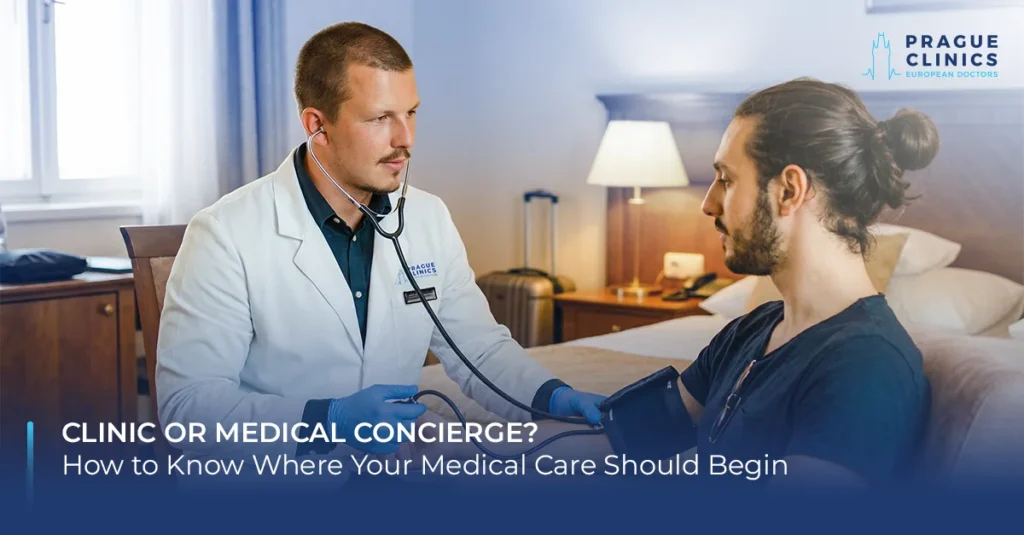
Clinic or Concierge? How to Know Where Your Medical Care Should Begin
When a health concern arises, many people hesitate at the first step:Should I visit a clinic, or is Concierge enough? This decision is not always obvious. Some conditions require in-clinic assessment, while others benefit from care delivered at home. Choosing the right setting early helps patients receive timely care, reduces unnecessary disruption, and keeps treatment efficient and coordinated. Understanding the difference between clinic care and Concierge services allows patients and families to make informed decisions that suit their medical needs and daily routines. Things Discussed in This Blog The difference between clinic care and Concierge When medical care should begin at a clinic When Concierge is the better starting point How concierge supports recovery and monitoring Concierge options available in Dubai How coordinated care improves outcomes Clinic or Concierge? Clinic care is usually the right starting point when physical examination, diagnostics, or specialist input is needed. Concierge is ideal for monitoring, recovery, nursing care, and situations where travel causes strain or delays treatment. Understanding the Role of Clinic-Based Care Clinics are designed for evaluation, diagnosis, and treatment planning. They provide access to medical examinations, investigations, and specialist consultations that help define the right course of care. Medical concerns that usually begin at a clinic include: new or unexplained symptoms conditions requiring physical examination diagnostic tests or imaging specialist assessments treatment planning or medication adjustment In these situations, starting at a clinic ensures clarity and prevents delays. Once a treatment plan is established, care may continue either in the clinic or at home, depending on the patient’s needs. When Concierge Is the Better Starting Point Not every medical situation requires a clinic visit. In many cases, Concierge in Dubai provides effective, timely, and patient-centered support. Homecare is often appropriate for: patients recovering after surgery elderly individuals needing regular monitoring wound care and dressing changes injections and medication administration physiotherapy and mobility support chronic condition monitoring patients who feel unwell but should rest at home In these cases, beginning care at home allows treatment to start sooner, without the strain of travel or waiting rooms. This is why many families search for a concierge near me when convenience and comfort are priorities. Mobility and Comfort: Why Do They Matter? Medical care works best when patients can follow recommendations consistently. Travel can be physically exhausting for elderly patients, post-surgery individuals, or those feeling unwell. Concierge for elders, in particular, supports safety and continuity by reducing fall risk and fatigue. Similarly, patients are advised to rest and recover more effectively when care comes to them. Comfort directly affects adherence, recovery, and outcomes. It is not a luxury, it is a necessity. Types of Concierge Services Available Concierge is not a single service. It includes a range of medical and supportive care options delivered by trained professionals. Common Concierge services include: Medical visits by doctors Concierge nursing for monitoring and treatment Concierge nursing in Dubai for injections, wound care, and medication support post-operative follow-ups Concierge physiotherapy service Dubai patients use for mobility and rehabilitation Chronic disease monitoring Elderly care support These services allow patients to continue care without interruption, while remaining under medical supervision. Why Is the Right Care Setting Important? Choosing the right environment early has a direct impact on how smoothly care progresses. When care begins in the right place: follow-ups are easier to manage unnecessary delays are avoided recovery stays on track outcomes are easier to monitor care fits into daily life instead of disrupting it This is especially important in busy cities, where efficiency and coordination matter as much as treatment itself. Concierge in Dubai: A Growing Need As families juggle work, recovery, and caregiving responsibilities, demand for Concierge Dubai services continues to grow. Patients value the flexibility of receiving care without compromising medical standards. Many families looking for the best Concierge in Dubai prioritise: qualified medical professionals clear communication coordination with clinic care safety and reliability continuity of treatment Concierge works best when it is part of an organized care system, not a standalone solution. How Do Clinic and Concierge Work Together? Clinic care and Concierge are not competing options. They are most effective when they function as part of a single care pathway. A clinic establishes diagnosis and treatment plans. Concierge ensures that care continues smoothly through recovery, monitoring, and follow-up. This integrated approach reduces fragmentation and keeps patients supported at every stage. At Prague Clinics – European Doctors, clinic consultations, telehealth, and Concierge services are designed to work together. Patients receive guidance on where care should begin and how it should continue, based on medical need rather than convenience alone. FAQs 1. How do doctors decide whether care should begin at home or in a clinic? The decision depends on whether diagnosis or treatment planning is required. If a condition needs physical examination, diagnostics, or specialist input, care should begin in a clinic. When the condition is already diagnosed and the priority is monitoring, recovery, or continuity of care, home-based medical services are often appropriate. Physicians assess symptoms, medical history, mobility, and safety before recommending the setting. 2. What are the limitations of Concierge compared to clinic-based care? Concierge covers most medical assessments, follow-ups, nursing care, and rehabilitation needs. However, investigations that require fixed equipment — such as imaging or certain specialised tests — must be performed in a clinic or hospital. A structured care approach ensures that patients receive homecare where suitable and are referred to clinic-based services only when medically necessary. 3. Is Concierge meant only for elderly or post-surgery patients? No. While elderly patients and post-operative recovery commonly benefit from concierge, it is also suitable for individuals who are unwell, advised to rest, or prefer care that does not disrupt recovery. Homecare supports patients whose condition does not require clinic-based diagnostics but still needs professional medical oversight. 4. How does Concierge affect continuity and quality of care? When concierge is integrated with clinic services, continuity is maintained through shared medical records, coordinated follow-ups, and consistent clinical standards. This integration prevents fragmented care and ensures that treatment decisions made in the clinic continue smoothly at home, without
Clinic or Concierge? How to Know Where Your Medical Care Should Begin Read Post »