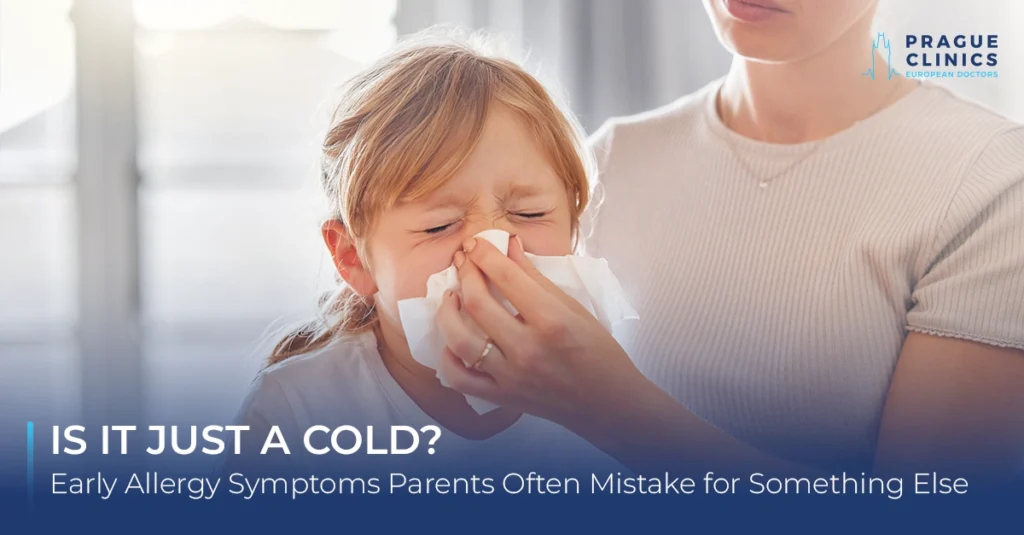
Parents often assume that a runny nose, mild cough, or skin irritation is “just another cold.” In many cases, that assumption delays the right care. In children, early allergy symptoms frequently look similar to common viral infections, especially during seasonal changes or school months.
Understanding the difference helps parents respond early and avoid unnecessary discomfort for their child. European family medicine places strong emphasis on recognizing patterns rather than isolated symptoms.
When allergies are identified early, children experience fewer flare-ups, better sleep, improved focus at school, and reduced risk of complications such as sinus infections or eczema worsening.
Things Discussed in This Blog
- Why allergies in children are often mistaken for colds
- Early seasonal allergy symptoms in children
- Skin allergy symptoms in children
- Key differences between infections and allergies
- When parents should seek medical advice
- How early evaluation helps prevent repeated symptoms
Treat yourself to a brighter smile this summer, at Prague Clinics with our exclusive whitening packages.
How Can Parents Tell If It’s a Cold or an Allergy?
Colds usually come with fever and resolve within 7–10 days. Allergies last longer, often worsen at specific times, and cause symptoms like persistent sneezing, itchy eyes, clear nasal discharge, or recurring skin rashes without fever.
Why Allergy Symptoms Are Commonly Missed in Children
Children’s immune systems react differently from adults. Early allergy symptoms are often mild, fluctuate during the day, and appear without obvious triggers. Parents may notice:
- repeated “sniffles” without fever
- nasal congestion that improves and returns
- clear runny nose lasting weeks
- itchy eyes without redness
- dry cough mainly at night
- skin irritation that flares without infection
Because these signs overlap with viral symptoms, allergies are frequently overlooked.
Seasonal Allergy Symptoms in Children
Seasonal allergies develop when a child’s immune system reacts to pollen, dust, mold spores, or environmental changes. These symptoms usually appear at the same time each year or worsen in certain environments.
Common seasonal allergy symptoms in children include:
- frequent sneezing
- blocked or runny nose with clear mucus
- itchy nose or throat
- watery or itchy eyes
- dark circles under the eyes
- mouth breathing
- disturbed sleep
Unlike colds, seasonal allergies do not cause fever and do not resolve on their own within a few days. European family physicians pay close attention to symptom duration, timing, and recurrence, rather than treating each episode as a new infection.
Skin Allergy Symptoms in Children
Allergies do not only affect the nose and eyes. In many children, the skin is the first place allergies appear.
Skin allergy symptoms in children may include:
- dry, itchy patches
- redness behind the knees or elbows
- recurring rashes without infection
- flaking or scaling skin
- worsening eczema during weather changes
- irritation after exposure to certain fabrics or soaps
These symptoms can be treated as isolated skin issues, while the underlying allergic trigger remains unaddressed.
Early identification reduces flare-ups and prevents chronic skin irritation.
Cold or Allergy? Key Differences Parents Can Look For
| Symptom | Cold | Allergy |
|---|---|---|
Fever |
Common |
Absent |
Duration |
7–10 days |
Weeks or recurring |
Nasal discharge |
Thick, yellow/green |
Clear, watery |
Sneezing |
Occasional |
Frequent |
Itching |
Rare |
Common |
Skin symptoms |
Uncommon |
Common |
Seasonal pattern |
No |
Yes |
Note: Viral infections can have similar symptoms to allergies, such as clear or watery nasal discharge. You can differentiate based on the nasal discharge: for common colds, it may change from clear and watery to thick and yellow/green, but it remains clear and watery for allergies.
Recognizing these patterns allows parents to seek the right care earlier.
Why Early Evaluation Matters
Repeated untreated allergies affect more than comfort. Research shows that persistent allergic inflammation can lead to:
- poor sleep quality
- difficulty concentrating at school
- increased sinus infections
- worsening asthma symptoms
- chronic skin conditions
European preventive care focuses on identifying triggers early, guiding families on environmental adjustments, and using medication only when necessary.
How European Family Physicians Approach Childhood Allergies
In many European healthcare systems, family physicians manage early pediatric allergies and coordinate care long term. This approach prioritises:
- detailed medical history
- symptom patterns over time
- environmental factors
- conservative medication use
- parental education
- early referral only when required
This model supports continuity and avoids repeated short-term treatments that fail to address the root cause.
At Prague Clinics – European Doctors, children with ongoing cold-like symptoms or recurring skin irritation are assessed by European-trained family physicians who regularly manage pediatric allergies.
The focus is on identifying patterns early, explaining findings clearly to parents, and choosing conservative, appropriate treatment to improve the child’s daily comfort and long-term wellbeing.
FAQs
1. Can allergies really look like a cold in young children?
Yes. Early allergy symptoms often cause a runny nose, congestion, and cough without fever. Because children catch frequent viral infections, allergies are commonly mistaken for repeated colds.
2. Why does my child always seem sick during certain months?
Seasonal exposure to pollen, dust, or environmental changes triggers symptoms at the same time each year. This repeating pattern strongly suggests allergies rather than infections.
3. Can skin allergies appear before breathing symptoms?
Yes. Many children develop skin irritation or eczema flare-ups before nasal or eye symptoms. Skin is a sensitive indicator of allergic inflammation.
4. Should I wait until symptoms become severe before seeing a doctor?
No. Early evaluation prevents symptoms from becoming chronic and reduces the need for stronger medications later.
5. Do children grow out of allergies?
Some children improve with age, but untreated allergies often persist or change form. Early management improves long-term outcome
A Calm, Clear Way Forward for Parents
When a child experiences ongoing sniffles, skin irritation, or disrupted sleep, it is worth looking beyond “just another cold.”
Early allergy recognition brings relief, stability, and better daily comfort.
European-style family medicine supports parents with clear explanations, organised evaluation, and conservative treatment strategies.
Clinics like Prague Clinics—European Doctors provide this approach through family physicians experienced in pediatric care, helping families address allergy symptoms early and confidently.