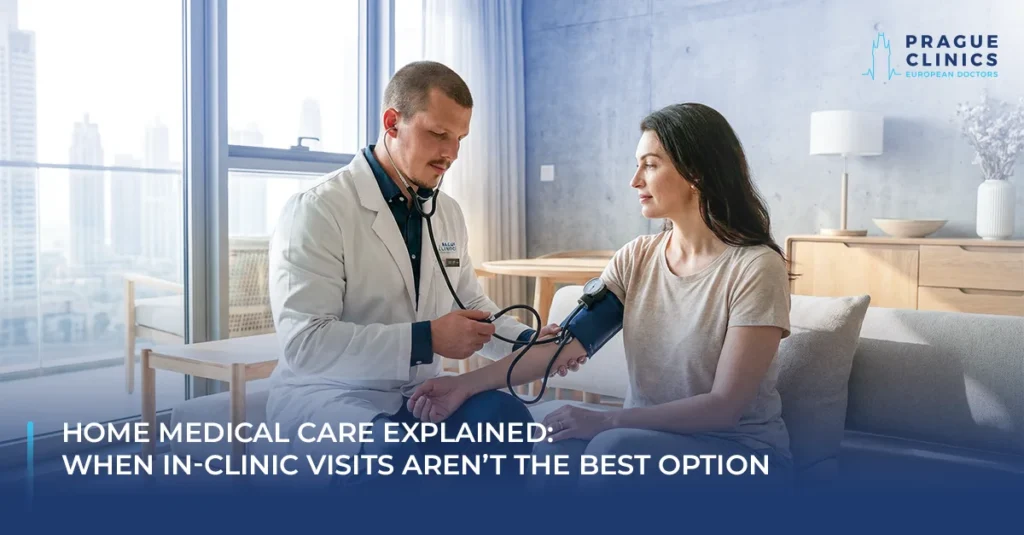
Access to timely medical care is essential, but not every health concern requires or benefits from a clinic visit.
For many patients, receiving medical attention at home can improve comfort, continuity of care, and overall health outcomes. Home medical care bridges this gap by delivering professional healthcare services in a familiar environment, without compromising clinical standards.
Understanding when home-based care is appropriate can help patients and families make informed decisions about treatment options.
Things Discussed in This Blog
- What Is Home Medical Care?
- Who Benefits Most From Home-Based Care?
- Clinical Advantages of Receiving Care at Home
- Home Care for Chronic and Long-Term Conditions
- Safety, Standards, and Medical Oversight
- When Home Care May Not Be Appropriate
What Is Home Medical Care?
Home medical care refers to physician-led healthcare services provided at a patient’s residence.
These services may include medical assessments, treatment administration, follow-up care, and monitoring of ongoing conditions.
Under structured home medical care services, patients receive the same clinical attention they would expect in a healthcare facility, supported by proper medical protocols and documentation.
Who Benefits Most From Home-Based Care?
Home medical care is particularly valuable for:
- Elderly patients with mobility limitations
- Individuals recovering from illness or surgery
- Patients managing chronic conditions
- Children who experience distress during clinic visits
- Individuals requiring regular monitoring or follow-ups
In these cases, doctor-supervised home healthcare reduces physical strain while ensuring consistent medical oversight.
Clinical Advantages of Receiving Care at Home
Providing medical care in a home setting allows doctors to observe patients in their day-to-day environment. This can offer important insights into lifestyle factors, medication adherence, and recovery progress that may not be evident during brief clinic visits.
With structured home healthcare consultations, care plans can be adjusted more precisely, often improving compliance and long-term outcomes.
Home Care for Chronic and Long-Term Conditions
Patients managing conditions such as diabetes, hypertension, respiratory illnesses, or neurological disorders often require ongoing monitoring rather than episodic treatment.
Home medical care supports continuity by enabling regular assessments without the logistical challenges of repeated clinic travel.
When integrated into a broader treatment plan, home-based medical follow-ups can reduce hospital admissions and improve disease management.
Safety, Standards, and Medical Oversight
A common concern about home medical care is safety.
When delivered through an established medical provider, strict clinical protocols are followed, including sterile procedures, proper documentation, and coordination with in-clinic services when escalation is required.
Receiving care through regulated home medical services ensures that patient safety, confidentiality, and clinical accuracy remain uncompromised.
When Home Care May Not Be Appropriate
While home medical care offers many benefits, it is not a replacement for emergency services or advanced diagnostic procedures.
Acute medical emergencies, severe trauma, or conditions requiring specialized equipment must still be addressed in a hospital or clinic setting.
Physicians assess suitability carefully before recommending home medical care as part of treatment planning.
Final Thoughts
Home medical care is not about convenience alone: it is about delivering patient-centered healthcare in the most appropriate setting.
When guided by medical professionals and applied to the right clinical situations, it can enhance comfort, continuity, and overall quality of care.